
Key Takeaway: Desflurane has an appealing pharmacokinetic profile, but it comes with a steep environmental price. Its global warming potential (2540 versus an equal mass of CO2) and 14-year atmospheric lifetime make it the most damaging commonly used inhaled anesthetic, contributing roughly 960 tons of emissions annually. This cumulative toll has led many hospitals, and even entire countries, to abandon desflurane in favor of greener alternatives.
We are not going to venture into the quagmire of contemporary politics, but instead use a recent article about the Military-Industrial Complex as a statistical starting point. The article described the enormous sums of money involved, noting in one case that a projected component would cost “over a trillion dollars.” It made us realize that we didn’t really understand what a trillion dollars means beyond the fact that it has 12 zeros. After all, we now even have the first Earthling trillionaire, Elon Musk.
We decided to pursue our edification by thinking of something we know well, a second, as in “one Mississippi, two Mississippi, etc.” So, surely thinking of a dollar as a second would yield a better understanding. Armed with a calculator and double-checking our work, we set off. But before we got to work, we took a guess: a trillion seconds must be about a year, well, maybe a year-and-a-half. Yes, we thought, that’s a decent enough guess. What’s your guess?
Well, we were sorely mistaken. One thousand seconds, it turns out, is about 17 minutes. With that in mind, and our calculator guiding the way, we found that 1 million seconds equals nearly 12 days, and 1 billion seconds equals almost 32 years. Knowing that one trillion is a thousand billion, we were astonished to see that our calculator displayed a trillion seconds as 31,709.8 years. In human history, a trillion seconds ago, Neanderthals and humans sometimes interacted, but the former’s population was rapidly dwindling. There was no written history; cave drawings had just begun to appear, and saber-toothed tigers roamed about. The first Egyptian pyramid would not be built for another 20,000 years.
Two conclusions emerged from our thought experiment: 1) we sorely misunderstood just what a trillion is, and 2) small, seemingly inconsequential things can add up to make a big impact! We were astonished at the strength, the enormity of a second when joined by other seconds. Let’s look elsewhere, where tiny things can have major implications, good and not so good.
Microplastics (MPs)
We’ve discussed their ubiquitous presence in modern life in a previous blog post, but a quick revisit with new insights offers perspective. There are over 13,000 chemicals in these synthetic polymers, with over 10 major groups considered toxic and released from the products during normal wear and tear or laundering. Microplastics are tiny, less than 5 mm, and are released by heat, material fatigue, and other processes. When they are 5 micrometers or less, they can, if inhaled, traverse the alveoli and enter the bloodstream directly. Like with the accumulation of seconds, their cumulative toll may have biological implications.
Recent research demonstrates that, depending on time spent indoors, the clothing you wear, your workplace, your daily routine, and many other factors, each of us, on average, inhales many thousands of MPs each day. When assessed, MPs are found in every organ of the body, including the placenta and semen. Over time, the exposure and burden of MPs may be associated with many comorbid conditions. They may, in the aggregate, have significant and far-reaching health consequences. We are all in for practices and innovations that limit our exposure to MPs and encourage you to explore what’s currently available and what’s being explored.
Desflurane and the atmosphere
Desflurane has an enviable pharmacokinetic profile, with a blood/gas partition coefficient lower than that of N2O and an oil/gas partition coefficient far lower than those of our other potent inhalants. But it suffers in two respects: it has a very low potency, necessitating a high administered dose, and an extremely high global warming potential (GWP). The latter is a metric that describes how much a greenhouse gas contributes to atmospheric warming relative to an equivalent mass of CO2.
To put that in perspective, here’s a chart we’ve created for you that illustrates how desflurane differs from our other agents.
| Agent & its MAC | GWP/kg of agent compared to the same mass of CO2 | # of years the agent remains in the atmosphere | # of car-driven miles comparable to 1 MAC hour of agent use |
|---|---|---|---|
| N2O | 273 | >100 | 49 |
| Desflurane | 2540 | 14 | 190 |
| Isoflurane | 539 | 3.6 | 8 |
| Sevoflurane | 144 | 1.9 | 4 |
The cumulative damage from each use of desflurane has led to its abandonment by individual anesthesia departments here in the U.S., as well as in entire European countries, Australia, and Canada, where it can be used only under extraordinary circumstances. Likewise, the damage N2O causes due to its GWP and extraordinarily long atmospheric lifetime has led to a movement to eliminate N2O pipelines—notoriously leaky — from new facility construction.
It may not seem like much, but when desflurane is used, it enters the atmosphere, where it remains for well over a decade. We tend to put a lot into the atmosphere because its low potency means a higher administered concentration. Like those seconds that accumulate, each dose of desflurane contributes to the global cumulative estimate of 960 tons each year, an amount projected to increase about 5% through 2026. This has led anesthesiology authorities to urge that desflurane should “des-appear” globally. Our individual habits do indeed have an impact when combined with others’.
Inhalers that are used to treat asthma or COPD
Hand-held, metered-dose inhalers use hydrofluoroalkane propellants, which contribute substantially to greenhouse gas emissions. Substantial enough that the U.S. federal government is conducting a phase-down of these and other hydrofluorocarbons.
We suspect you are thinking, “Really, those little inhalers have an effect on the atmosphere?” But like those accumulating seconds, in the aggregate they can have a substantial impact. In the case of these handheld inhalers, an elegantly conducted study published in JAMA describes the cumulative effect of the 1.6 billion inhalers distributed and used over a decade of treatment. The study revealed that these pocket-sized inhalers, approved for asthma and COPD, emitted approximately 25 million metric tons of CO2 equivalents into the atmosphere. Remarkably, that’s about what 530,000 gas-powered cars produce each year.
There is great room for novel thinking and development here. Surely there is a way to develop and market a mechanism to deliver the product using a non-atmospheric disrupter. We believe this is an actionable and worthy pursuit. Maybe one or more of you, among our readers, have an idea for creating an effective device that is safe for both the patient and our environment. What about a dry powder inhaler, or a device that mimics what a Windex® window cleaner spray bottle does?
A leaky faucet, a bicycle, and the amazing beaver
Let’s end with a couple of other examples of how little things can add up and have remarkably long-range consequences. The first one led us straight to our local hardware store for a DIY fix!
The saga of a leaky faucet
The ‘drip-drip-drip’ of a faucet that won’t quite stem the flow of water is often ignored as a trivial nuisance, but can, over time, add up. Turns out, one of those drips can vary in size due to factors like surface tension, gravity, air resistance, and the point of its origin. But concerning a kitchen or bathroom faucet leak, common origins, let’s assume the droplet is about 1/3 of a milliliter.
We went to the United States Geological Survey site, the agency that deals with water, biological issues, and all things Earthly. This is something you can do with their online tool. We entered the following values into its calculator: one house with 2 leaky faucets, each leaking two drops per minute (that’s almost 6,000 drops per day), which sums to almost 140 gallons of water in one year. If just one faucet leaks one drop each second, that’s about 2,700 gallons each year.
Compound that by a hundred, a thousand, a hundred thousand, or a million or more homes, and the volume of lost water is astonishingly large. Water is a precious commodity and growing scarcer in many parts of the world, even domestically. We should fix our leaks!
How a bicycle can help planet Earth (and you too!)
It’s been alluded to by so many people for so long, in so many ways, that it’s hard to know who first came up with it. But no matter who got the ball rolling, it’s clear that a noble thing each of us can do for our children, for the next generation, is to make sure that our impact on the Earth itself is as minuscule, if not imperceptible, as possible. If you want to leave a mark on the world, do Earth-friendly things and leave a small carbon footprint. Reducing our carbon footprint is a goal worth pursuing.
An easy way to achieve this is to use a bike (or walk) more often. Cities like Bogotá (Colombia), Montreal, Barcelona, Taipei (Taiwan), Copenhagen, and U.S. cities like Portland, Oregon, and even New York have collectively reduced their carbon footprints substantially. Recent studies reveal that some 700 metric tons of CO2 pollution would be saved each year if we all rode bikes like the Dutch do.
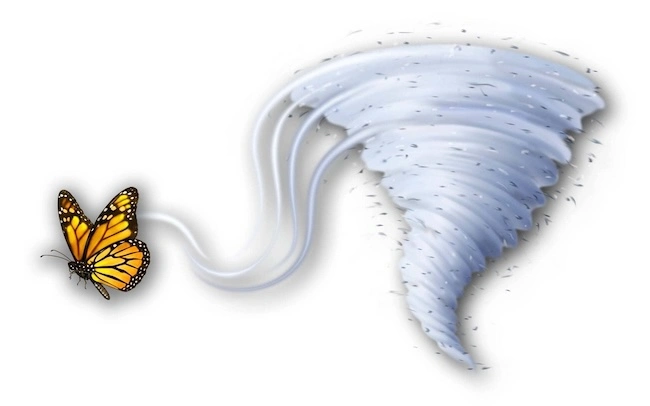
While many of us can’t live like the Dutch, the model speaks to the possibility and power of what a single thing, done collectively, can achieve. Think “the butterfly effect,” where a single change in a system can have far-reaching, downstream consequences—in this case, positive ones!
And what can a beaver do?
Beavers are master architects and engineers of the ecosystem, creating wetlands that trap nearly 500 tons of CO2 each year, thereby saving the government millions of dollars. The monetary benefits result from reduced erosion, stimulating plant growth in otherwise inhospitable regions, protecting land from wildfires, and providing benefits to wildlife. Though it is difficult to quantify, the number of beaver dams in the U.S. amounts to millions, in part because the critters are constantly building. Because of human development, there are far fewer today than there were five years ago. While considered pests by some, in the aggregate, they are Earth-friendly, and we benefit from what they do.
And back to those seconds……
We started by getting a sense of what a ‘trillion’ is by adding up seconds, revealing the enormity of that number, and recognizing that little things may add up to have, or demonstrate, a big effect. Similarly, appreciating how small changes can have considerable downstream consequences can help mold our daily personal and professional behaviors: the classic “butterfly effect,” where a small action may have far-reaching, downstream consequences.
Oh, and one more hard-to-digest image to leave you with. One trillion pennies, stacked atop one another, would create a tower 870,000 miles high. The power of small things in the collective.
We understand the challenge of finding and earning CRNA CE credits while also maintaining a busy schedule. Whenever you’re ready, we have a course that fits what you need to meet the NBCRNA MAC program requirements.
Related Articles